Sunday, 17 November 2013

October-November

October is the rainiest month in Penang and there is little chance of doing much photography. To avoid the rains I had planned a trip to Australia making use of accumulated air miles on Singapore Airlines. I pondered a number of options on where to go and accepted an invitation to stay with Ron and Georgie McKie who had escaped from shaky Christchurch and are now living in Tasmania. Helen and I had not been to Tasmania despite several invitations form an ex-flatmate who lives near Hobart.
It was a four flight trip to get there; Penang to Singapore, Singapore to Sydney, Sydney to Melbourne and Melbourne to Devonport. The flights were without incidence and the longest was on the impressive A380, which was not at full capacity, to the Canadian-designed Bombardier Dash 8 that plies the Bass-straight run.


Devonport is the third biggest town/city in Tasmania. The tidy airport has four return flights a day across Bass Strait to Melbourne. Nearby Burnie has similar Strait-hopping flights to Adelaide. Devonport is also the terminal port for the ferry that plies Bass Straight each evening while a sister ship makes the opposing journey.


Ron and Georgie picked me up from the small Devonport airport and we were at their house about 12 minutes later. Their large house is on a hillside with trees at the back and side and a sloping paddock meeting a small creek in the front. The sun skuds across from right to left each day and angles into the main living quarters. The temperatures are pleasant but with a slight chill that makes it comfortable to breathe and to snuggle under the blankets at night. The property has a number of outbuildings that have been used for chook yards, horse barns and goat shelters. The grounds are extensive and the price was relatively cheap compered with the mainland or New Zealand prices. 


Birds twitter all day in the surrounding trees and the garden is busy with their activities. White-faced herons nest in the nearby tall trees, a starling brings worms to it’s brood under the eaves, raptors sit in the trees to survey the surroundings and finches and wrens hop around seeking insects. The whole property and indeed the whole state seems alive with the Superb Fairy-wrens that are one of the most iconic and well-studied Australian bird species. Like adults in Australian society they are monogamous and promiscuous. The breeding group consists of an alpha male and female and a number of helpers that may be offspring or members of the territory. Interestingly DNA studies have shown that over 67% of the chicks come from outside agencies. I think Ron and Georgie have made a great buy with a nice location, prime situation and proximity to shops and other required services. Pademelons and wallabies roam the property at night and possums try to find a cozy corner in some of the buildings. As responsible cat owners a large cat run was built around and adjacent to the house to give their feline an extensive and interactive play area but sequestering it from the small marsupials that roam at night in the area.
The prime objective with the trip was photography. A perch had been set-up and daily doses of grated Parmesan cheese supplemented with mealworms attracted the resident wrens into a photographic possibility. I spend several mornings sitting in front of perches waiting for the wrens to pose. The alpha male on our resident pair was found dead one morning and our hearts fell. Another member of the group replaced him within a day and the tribe did not miss a beat. I tracked several females and found a nest that had been constructed in a pile of garden rubbish in the middle of the vegetable plot. There were three eggs in the nest that was located about a foot above the ground.


Ron and Georgie along with the Devonport Photographic Club had arranged for a one-day workshop promoting Nature Photography. I spoke twice during the day and also partook in a question and answer session. There was a small article in the local paper about the event. Nature photography is not big in Tasmania but the workshop attracted around 60 people and raised over $900 for the local club. The next morning we had some of the speakers and club officials out to the house for the morning. I also gave a talk to the Devonport club on the following Wednesday evening.


We had a number of excursions into the adjacent countryside in the following days. We drove to Cradle Mountain and walked briefly around part of the lake and took some landscape shots. We stumbled across a Tasmanian Echidna, which is strikingly different from the mainland species. We also checked out a facility that raised Tasmanian Devils. The enclosures were well-constructed and the animals were very well tended. I think the same Wombat designer also conceived the Devil on his drawing board, possibly just before lunch break….both have large heads and seemingly incomplete or dislocated back legs that seem part of something else.


While at Cradle Mountain we also viewed a photographic exhibition that was in parts quite awesome. Given a striped shirt, a black mask and a fast get-away vehicle I would gladly have taken 10-12 of the displayed prints.
Prior to going to Cradle Mountain we had been out to Narawntapu National park that had a boardwalk amongst scrub and wild wombats and kangaroos. The mean person that had designed the hide clearly did not like people with large lenses as the observation/camera holes were about the size of a slot in a letterbox.


We were introduced to the Black River camping ground by Dennis Hulme who had observed a number of nesting situations including Striated Pardelote and Kookaburras, both species making use of cavities in trees to raise their young.  There was no sign of the Kookaburras but there were several Pardelotes busy with nesting duty. One nest was well located for photography and we spent two mornings photographing the traffic in and out of the cavity. The pair appeared not to be feeding chicks but their interaction with each other was fascinating. They greeted each other by flaring the wings and tails, much like I had seen with my local White-throated Kingfishers.


A few months ago Ron had photographed a Pink Robin in the Liffey Falls carpark. We set off on a mission to find this colourful little bird and set up a photographic ‘studio’ in a segment of the carpark. There was no sign of the Robins but the little Blue wrens were plentiful and we got our best photographs of them at this location. The Robins apparently migrate to a different location when nesting.


The Northern Tasmanian landscape impressed me: I was taken by the green grass, the backdrop of gum trees, the rolling hills and the  dress-circle of the rugged hills/mountains (or Tiers, as they are known locally). The local produce is bountiful ranging from apples and pears, to stone fruit and dairy produce. They even grow Opium poppies. 
On one road (Wilmot Rd) it appeared there was a case of one-upmanship regarding letterboxes. There was a whole range of mail receptors from Daleks to a beer-can angel.


On another day Ron and I drove to the Tamar Wetlands Park just outside of Launceston. The sky was leaden and a wind whipped up the water but we walked the extensive boardwalk looking for potential subjects. 


After a good Australian pie for lunch we went to inspect Cataract Gorge Park. In 15 minutes you can walk from central Launceston along the banks of the Tamar River into the Gorge. From here you follow a pathway, originally built in the 1890s, along the cliff face, looking down onto the South Esk River. The Kings Bridge over The Gorge was floated into place in 1867. The First Basin, on the southern side, has a cafe, swimming pool and an open area surrounded by bushland; it is Launceston’s beach. In contrast, the shady northern side, named the Cliff Grounds, is a Victorian garden where wilderness is created with ferns and exotic plants. There is a kiosk, restaurant and swimming pool, rolling lawns and a rotunda, a footbridge and chairlift across the river, peacocks in the trees, wallabies at dusk. Further upstream is the historic Duck Reach Power Station, now an Interpretation Centre. The Launceston City Council originally commissioned the Power Station in 1893, making it the largest hydro-electric scheme of its day. By 1895 it was lighting the city.


My time in Northern Tasmania went very quickly. As Helen delivered me to the airport I said I would also be using the trip to investigate a suitable location for our next living headquarters. I was under strict instructions not to buy any edifice but did spend a bit of time observing and interrogating. It was clear that most locals, invaders and visitors all have a high opinion of what they see. I was the same. I only saw a bit of Northern Tasmania from Stanley in the West to Launceston and down to Cradle Mountain. There are few negatives other than the job situation which gets more urgent for young families as industries desert the island. Included in the many plusses are the mild weather, the lack of crowds, the great produce and the cheaper house prices. I may well return.


Other (horse) news
Dani turned 21 in October and is having a good time in Northern Spain where she is teaching and learning in and out of school. This counts as her 3rd year of her degree and she returns to Cambridge for the 4th and final year. Jack is in Chile and has recovered well from his accident.


Nikki has completed the first year of her medicine course and awaits the exam results. She is currently doing some work in Okinawa, Japan where her boyfriend is currently doing post-graduate research.
Helen keeps herself busy and keeps the house running and does a great job with the Airbnb assignments. We have a Japanese family on board at the moment. Another project she currently has is organising a stall for IWA and getting the homemade products to stock it. Prior to Tasmania we both enjoyed a day at the races that was also organised by IWA. I might add that my pick of the day charged out of the stalls and was on his own past the post the first time and was first into the bird cage……the only problem was the starter had not pushed the start button.


Saturday, 28 September 2013

September 2013


September is the second wettest month in our location. We have had periods of steady rain but also weeks at a time without rain.

It is a month that did not seem to register a lot of activity.  Nikki is heading to Okinawa soon during the term break. Dani is now in Spain and smiling Jack is in Chile. Dani has hit the ground running and seems content with her situation albeit it is only a week.

Helen has been busy teaching an increasing number of students and organizing events for the Women’s Association. We had an tour of one of the regular cruise boats that come to Penang. It was one of the boats owned by Genting, the Casino operators and it also has a heavy emphasis on gambling. The ship is 25 years old and the décor dates it to that period. I am not impressed with cruising and that sort of environment…..unless seabirds are flying close to the ship. The tour around the ship however was well done and entertaining.

Looking towards the Penang Bridge from the cruise ship

Looking towards Straits Quay

A rain shower passes over Penang Hill

Life boats on the cruise ship (they can hold over 100 persons)

The rather small swimming pool

The crew playing basketball

Most photography has been done on the computer as the weather is moist and bird activity is slow. I note that the migratory birds have started to arrive on the foreshore and I had a very nice encounter with the local Barn Owl around 6.30am in the morning this week.

The main event for me was that I went back to Merapoh (an entry to Taman Negara) for 5 nights with two friends from Singapore. They drove up and I drove down. As it is the wet season I expected a few disruptions but the weather generally behaved. The nearby jungle has many interesting citizens but they don’t hang about on deck chairs at the edge of the road. A local driver told us he spotted a tiger a week prior to our visit. Nick is into mammals and reptiles; Horst is a sound recorder and photographer and has excellent bush skills. Together it is a nice combination of skills and interests. I took a bar fridge in the back of the SUV and this was great to keep the beer cool for one thing…but butter, bread and meat lasts a lot longer. 

The bar fridge in place

Where tigers roam

There is not much food choice locally with a few family restaurants providing local fare only.  ie there are no listings on the Michelin Guide. You get used to Nasi Goreng and ordering things in Malay. The village of Meraphoh is 7km from the settlement where we stayed and on the way back we did some spotlighting in the ubiquitous palm plantations. 

Small-toothed Civet (photo by Nick Baker)

Palm Civet (photo by Nick Baker)

Leopard Cat (photo by Nick Baker)

Most nights we saw interesting things including Leopard cats and various Civet species. My main mission was to photograph some Banded Pittas. Pittas are generally colourful birds of the forest floor or mangroves. The target family had three chicks but only one had survived. They can be lured into a feed of mealworms by playing their calls. Noticeably other birds had adapted to this action and at least seven different species reacted to the ‘dinner gong’. The light in the forest floor can be very dim and only late generation cameras can handle these conditions without getting an image that is a grainy mess. It is best to sit in a hide but I found just by sitting still the birds took no notice of my presence. Sitting in a hide in a Malaysian jungle with mosquitos and leeches seeking a meal is not a lot of fun. 
I was happy to get both adults in one frame. As usual it is nice waking up to the calls of the Gibbons and several species of hornbills. I could do without the Asian squat toilet and cold showers.

Banded Pitta pair. Female on the left.

The surviving chick

We got a driver to take us 14km into the jungle to see if we could spot more of the Hairy-nosed Otters. Nick sat for three hours without a sighting. He later sighted, and photographed, one in the river behind our accommodation. It thus appears this otter species, which has not been sighted for decades in this area and reasonably well established  For bird photography ....other than using lures, you need a fruiting tree when various species will come from miles around to feast. There were no seriously fruiting trees on this trip......which is why we were intent on photographing butterflies puddling as an alternative. (Butterflies will puddle....associate in large numbers...... if there is a concentration of some nutrient or salt that they are partial to.). It has to be added that butterfly photographers sometimes pee to get this phenomena occurring. 

Nick waits patiently

Nick and Horst (he was at Flinders at the same time as me)

A Five-barred Swordtail


As usual I drove through the Cameron Highlands and took more shots of the random plastic development there. When the temperature rises with lower altitudes the bush is cleared for palm oil…..so the trees are generally on a hiding to nothing.

The plastic disease of Cameron Highlands (all plastic hot-houses and many mud slides

The beautiful forest is cleared randomly to grow fruit and vegetables in the cooler climate

At slightly lower altitudes the bush is cleared for palm oil plantations

We have had three sets of houseguests this month, so we are steady in that direction. We have had a German family book for 8 nights over Christmas. The son is working here for six months so came around to check things out.
The hirsute little girl is going well. She is in good health and is as inquisitive as ever. Her latest trick is to lie wrapped around your neck when you are watching TV….like those fox stoles women used to wear……in the olde dayes.

Friends


On the sports front; The America’s Cup was strange….it appears there were as many Kiwis on the Oracle side and if it was horse racing there would be an appearance before the stewards. I have just watched both of the Rugby Championship games and can sum things up in two statements;
(              The Aussies owe Robbie Deans an apology
(              The scrums are a total shambles.

Saturday, 31 August 2013

August 2013


August is a slow month with nature photography as the migrant birds are sunning themselves in Europe and the bee-eaters are done with their nesting cycle.
It is a good time to catch up with work on the computer and I have additionally been asked to edit a monthly newsletter for the digital division of the Australian Photographic Society. I have put out two editions already but there are a lot of dinosaurs in that society and they are not forthcoming with articles when asked.


I have also been approached by a printing company/bookstore chain to write a book on Nature Photography. I expect it will be quite a lot of work for minimal return.
On the family front the Incas are back in NZ after a good look at central America. Al had her purse snatched in Chile and Doug had his appendage bitten by a shortsighted sea lion in the Galapagos.
Nikki is coming to terms with kids under the poverty line and shortsighted Government funding agencies. Dani has been the most challenged of all. Last month Jack had a near fatal accident when he was knocked from his bicycle. He was airlifted to Addenbrooke’s Hospital with broken ribs, teeth and bleeding from the brain. He fortunately recovered quickly but his mother was also in an out of hospital at the same time with acute pancreatitis. Dani was nurse, morale-lifter and general organizer. Both she and Jack were supposed to be in Spain and Chile, respectively. Both have delayed their departure while Jack has profound and expensive dentistry.
The other unfortunate occurrence was I am now a year older…..just as I was hoping to forget birthdays too many people reminded me. Helen and I took a couple of days out and stayed at a 5 star hotel on Langkawi, which was undergoing renovation. It was nice in parts. Our room had a great bathroom but the aircon tried its best to mimic arctic conditions (there were enough penguins around as it was) and refused to shut off at the set temperature. The pool and surrounds was really nice and better still it was an adults only pool. There were other family pools.


Reception area is behind the men and there are copious fish ponds (good for Jack)

A salt-water swimming pool

Adults only pool


Dawn on the beach. A glimpse of a Thai island on the right.

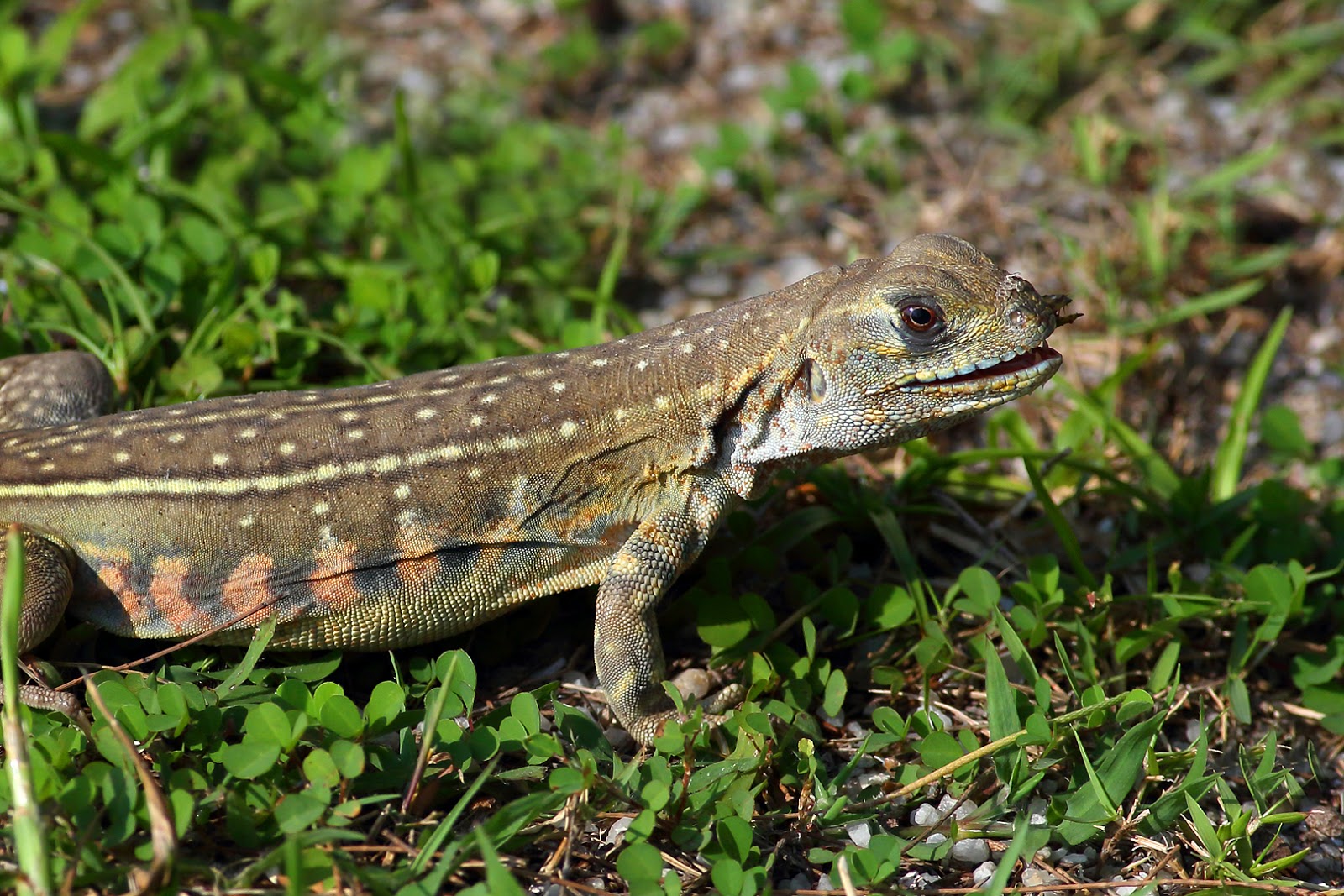
Common Butterfly Lizard. This species live in sand holes at the edge of the beach.

The cook is making a fancy roti for breakfast.

I only took a relatively small lens with me and did not shoot much. We went on a boat trip into the mangroves and there were only two of us on the boat. Unfortunately there are too many cowboy tour operators who speed through the mangroves and feed the kites and eagles with things they don’t need. We also saw the people on one boat has given the macaques a large packet of peanuts. We had fairly heavy rain descend on us and we hastened back to base. Our guide Zoher was pretty good and explained how the different plants in the mangrove forest propagated. The mangrove area is quite substantial on either side of the waterway but in the past the authorities foolishly allowed a charcoal industry to occur with fairly strict quotas. As often happens one operator got greedy and cut a lot of mangroves down behind a facade of healthy plants. They were then all closed down.


About to embark on the mangrove trip

Crab netting. The motor is a modified grass-cutter

Zoher explaining how seed-pod from a mangrove tree is constructed.

Remnants of a charcoal kiln

An immature Brahminy Kite flies past the mangrove forest.

An immature Sea-eagle dives from a tall tree

An immature Brahminy kite with rain on the hills behind
It seemed to be a month of Jacks. A medium sized Monitor Lizard the staff called Jack would come across the road from the mangroves help himself to a few fish from the decorative pond and swim in the adults only pool. At least I did not see him ordering a Pina Colada at the bar.
I  had always wonder what dug the holes in the sand at the top of the beaches. Lower down I had seen crabs scuttle to safety but I observed it was a lizard that turned out to be a Common Butterfly Lizard......a blanket term for around 8 different species. The Malayan Butterfly Lizard only consists of females and breeds by parthenogenesis. This species is not found on Penang or Langkawi but is located on the adjacent mainland.

One curly haired resident was sad to see bags out before Langkawi and parked herself in mine for about 15minutes.


At the beginning of the month Ramadan finished with Hari Raya celebrations. We had two groups staying at the house with 4 from a church group, all very nice ladies and then another two young ladies who were at an Indian product fair. They were here 5 nights and we did not see a lot of them but they were very nice people as well.
Back to nature photography I also had an article published on the website ‘Naturescapes’. It was about the benefits of working a local subject.


Another sad event happened during the month. I was told by friends at IMCB that one of the previous board members and a very nice man had passed away at the age of 60. I worked in an area close to Tony Pawson and had a number of discussions with him on our shared work area. He was touted as a likely Nobel Prize winner. 

In the last few month Malaysia has become like the Wild West. There have been a number of shootings in Penang on the streets during the day. This has been gang-related apparently as they fight for turf. The locals are becoming scared to go about their daily activities. Guns are apparently readily available and Singapore has given it's citizens a warning about going into Malaysia. The police raided a gang headquarters in a Condo in Penang and shot dead 5 gang members. These things do not happen suddenly it is like a volcano erupting, there are both reasons and signs of problems that have been ignored like the many traffic violations.

To end the month I had two nights in Singapore on an academically-related visit. It was good to be back in organised and tidy Singapore for a while. I also had my camera serviced by Canon as I don't trust the system here. The hotel room had a nice view of the centre of Singapore. The other shots are across the waters to Sentosa, an island I used to shoot bee-eaters and now you shoot  craps in the Casino. The final shot is a nice wall mural on the ground floor of the Canon offices.

Back to Malaysia yesterday and straight into traffic jams as it was National day and a holiday.