
Thaipusam is a Hindu festival
celebrated mostly by the Tamil community on the full moon of the Tamil month of
Thai (January/February). It is observed where there is a significant number of
Tamils; India, Malaysia, Mauritius and Singapore. In Malaysia, where it is a
public holiday, the two centres for celebration are Kuala Lumpur and Penang.
The word Thaipusam is a
combination of the name of the month, Thai, and the name of a star. Pusam. The
particular star is at its highest point during the festival. The festival
commemorates the occasion when Parvati gave Murugan a Vel (spear) to vanquish
the evil demon Soorapadman. Murugan is the embodiment of Shiva’s light and
wisdom and devotees pray to him to overcome obstacles they face, or have
overcome.
In Penang Thaipusam is
celebrated at Arulmigu Sri Balathandayuthapani Temple (Hilltop Temple) along Jalan
Waterfall (about 2 miles from our house). On the eve of Thaipusam, a silver
chariot with the statue of Lord Murugan is led on a procession accompanied by
Chettiar kavadi or devotees carrying peacock feathers. The 15-hour journey
culminates around midnight. Coconuts are smashed on the roads before the chariot
to symbolize the shattering of one’s ego in the pursuit of self-realization. In
addition, devotees also make offerings of fruit, flowers and incense to the Lord
Muruga in the Silver Chariot. Priests on the chariot receive the offering………. and a front-end
loader from the council follows behind picking up the broken coconuts.
On Thaipusam Day, devotees undertake the pilgrimage
from the Lorong Kulit temple to the Waterfall temple. We started our journey at 7am
and caught a bus to the nearest point of the procession route. The procession
route is along Western and Gottlieb Road and these roads are lined with over 100
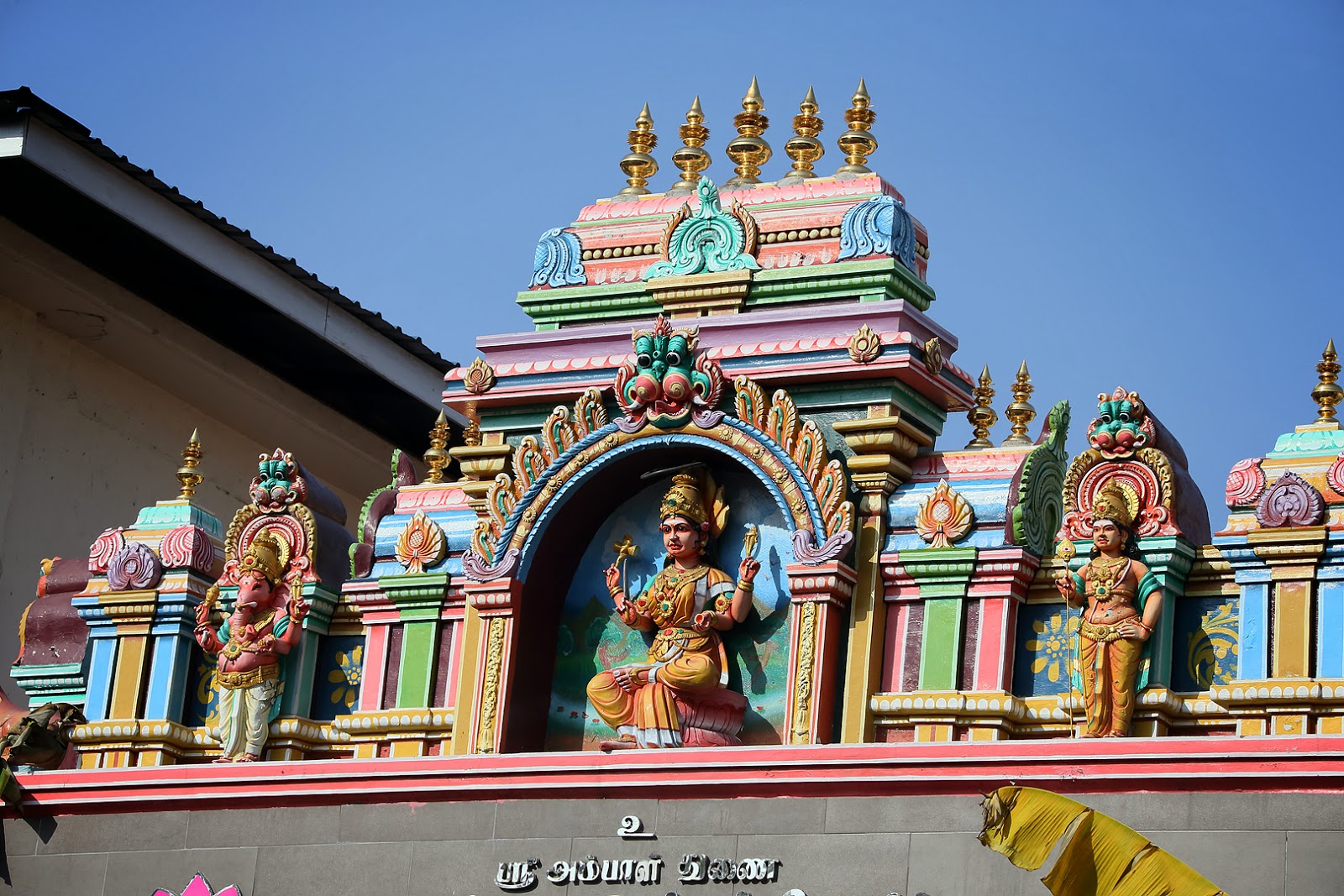
colourfully decorated stalls. Some of the statues of deities are very colourful and elaborate and even the road is painted with Hindu religious symbols in places. The stalls sell traditional Indian foods,
souvenirs, decorative items and snacks and refreshments. Thunderously loud music that shakes the ground, singing, dancing and the beating of drums….. aurally
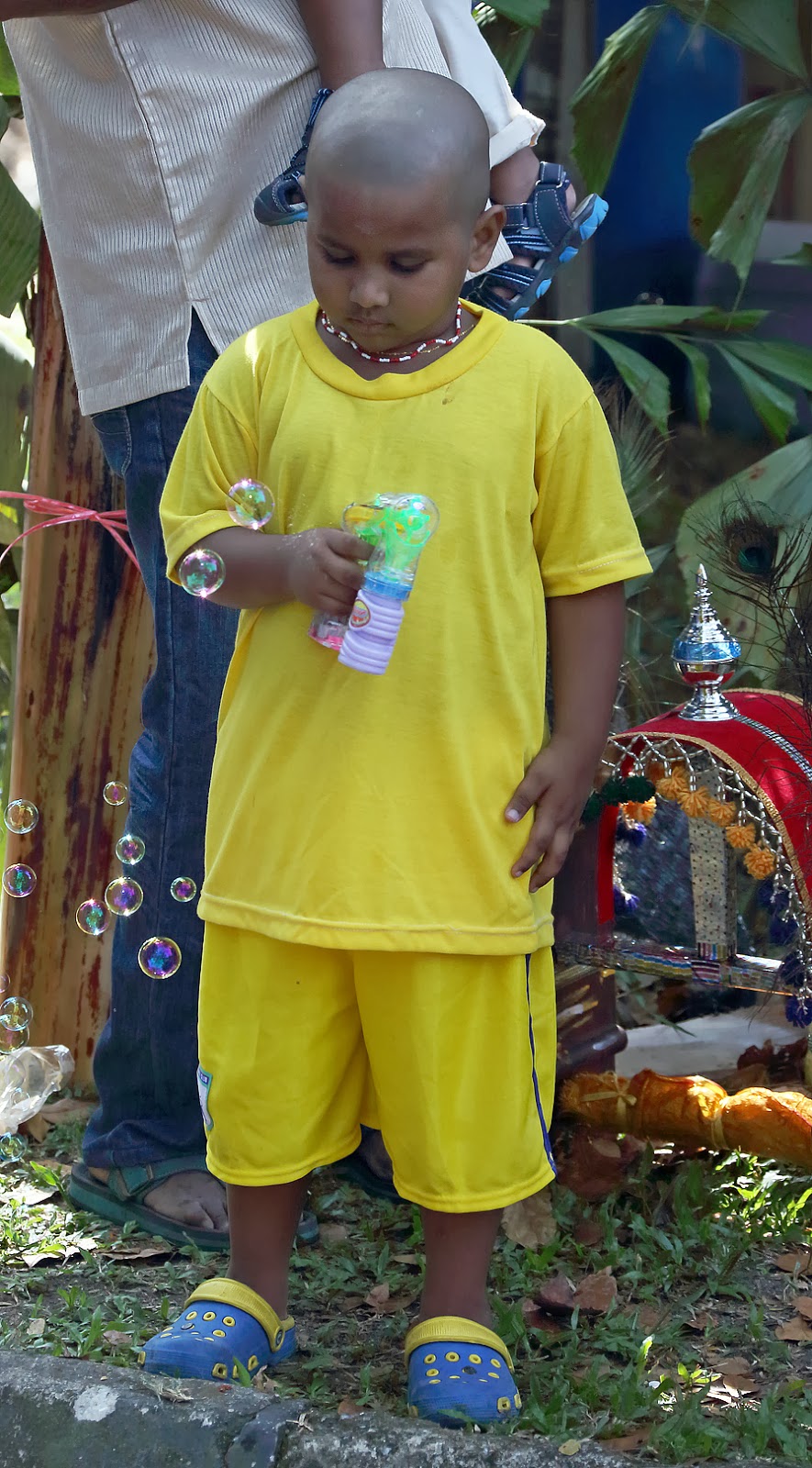
and optically decorates the senses. Everyone is dressed in his or her best and
the young take it in their stride. The day was hot and sunny throughout.




The other important element
of Thaipusam is the kavadi. The kavadi
is a physical burden through which the devotees implore the God Murugan to help
them overcome an earthly obstacle. For instance if a couple cannot conceive a child they
may guarantee to undertake some burden during Thaipusam if the wife gives
birth.
Devotees prepare for the
celebration through prayer and fasting for approximately 48 days before
Thaipusam. The kavadi-bearers have to perform elaborate ceremonies at the time
of assuming the kavadi and at the time of offering it to Murugan. The
kavadi-bearer observes celibacy and eats only pure, Satvik food once a day
while continuously thinking of God.
On the day of the festival,
devotees will shave their head (often at the end of the parade) and undertake a
pilgrimage along a set route while engaging in various acts of devotion,
notably carrying various types of kavadi (burdens). The simplest kavadi entails
carrying a pot of milk, but mortification of the flesh by piercing the skin,
tongue or cheeks with vel skewers is common.
The small spear through the cheeks reminds the bearer constantly of Lord
Murugan and also prevents speaking and gives great powers of endurance. Other
types of kavadi involve hooks stuck into the back and either pulled by another
walking behind or drawing a decorated bullock cart. The points of incisions of
the hooks vary the level of pain.
In the images below each of the little pots is filled with milk and attached to the skin with a hook. Some devotees carried limes on hooks.


It was apparent that devotees
that passed us had a combination of kavadis. I saw one woman with a skewer
through her cheeks but the fairer sex generally carried milk pots on their
heads. One gentleman was shuffling along with what looked like concrete clogs on his feet. On closer inspection these were revealed to be wooden-based
and covered with upturned nails.


The more flamboyant kavadis were a work of art themselves. The devotees, who were already variously pierced, supported the more flamboyant kavadis by waist and shoulder harnesses and yokes.
A support crew was vital to the kavadi carriers to give moral or physical support. Some carried plastic stools for their devotee to rest on if necessary. The participants with pierced tongues had to have water literally dropped into their mouths. Some support crews consisted of a travelling percussion group.


Despite the weight of their
burden and the pain of the piercings the ornate kavadi carriers had time and
energy to dance to the throbbing Indian music.


After watching various
devotees going past we made our way down to the piercing area, which was held
in an empty lot across the road from the starting temple. The area was crowded
as young men were prepared for their journey. Some were already unsteady on
their feet and relatives looked on anxiously. The old hands looked on knowingly
as they had seen it many times before. Piercings had begun in the early morning and there were many more to be done at midday.


The route from the Lorong Kulit temple to the Waterfall temple is approximately four miles.
The latter temple is on a hillside and has 500 steps, which further tests the
endurance of the kavadi carriers. In the temple they have the skewers and hooks
removed and the milk carried in the many pots washes the statue and the nearby
stream flows white.
The next day the silver
chariot with Lord Muruga makes a return trip to Kovil Veedu along Penang
Street. The return trip starts at 6pm and ends at dawn the following morning.
Not all of the devotees are
ethnic Indians as there are increasing numbers of Chinese undertaking the
ritual.
A Dutch woman in our group had seen Thaipusam celebrations in India, where they are apparently restricted currently, and stated that the Penang festival was not as colourful. If that was the case my camera would suffer from chromatic exhaustion should I ever photograph the Indian version.
For a better view of the images go to the Thaipusam 2014 site on my website here. It is not a public page currently. The images are in approximately in the same order.


